Sunday, November 20, 2022

The Joyful Reveille - Sermon for the Last Sunday of the Church Year

Last Sunday of the Church Year, November 22nd, Year of Our + Lord 2022
The Joyful Reveille: Matthew 25:1-13


LSB 516:1

Wake, awake, for night is flying;
The watchmen on the heights are crying:
Awake, Jerusalem, arise!
Midnight hears the welcome voices
And at the thrilling cry rejoices;
Oh, where are ye, ye virgins, wise?
The Bridegroom comes, awake;
Your lamps with gladness take;
Alleluia! With bridal care yourselves prepare
To meet the Bridegroom, who is near.


     It’s a great day for trumpets and cornets.  Our sermon theme is “The Joyful Reveille,” because this Last Sunday of the Church Year is a day of great rejoicing.  Wouldn’t it be great to have a bugler, or trumpeter, actually blowing reveille to start the sermon? 


   What, you don’t find the jarring blasts of reveille, that traditional military wake-up
bugle call, all that joyful?  For new recruits hoping for a bit more sleep, reveille, blasted on a bugle, is jarring and annoying.  That’s really the whole point of blowing reveille, to wake someone who needs to be get up, but persists in dozing.  Please, just five more minutes. 


   Your bugler may have been your mother, yelling up the stairs that you’d better get moving or you’ll miss the bus.  Or perhaps you know that special joy of your drill instructor throwing an empty metal garbage can down the middle of the squad bay, then playing the lid with a baseball bat, greeting you into another fine military morning. 


   Or maybe your reveille still comes, silently, at three in the morning, when the impending pressures of life and work and finances and worries about kids make you suddenly wide awake, bolt upright in bed.  Exhausted, but now you’ll never get back to sleep. 


       We don’t like to be rudely awakened.  So we don’t often enjoy reveille.  When are we ever bursting with joy to be shocked out of bed, at O-dark-thirty in the morning? 


   So maybe it’s hard to take the parable of the ten virgins as good news, even though you believe in Jesus.  But somehow our hymnwriter, Philipp Nicolai, found great joy in this parable.  Do you?  Are you eager and well prepared for the return of the Bridegroom?  Or are you more like a Foolish Virgin, planning on filling your lamp later? 


     We should anticipate the End, the Last Day, like Christmas morning.  As a child, and, truth be told, often even as an adult, the prospect of opening all the presents under the tree has made me eager to jump out of bed and race downstairs, the earlier the better. 


   What else can make us spring joyfully from bed?  How about an unexpected homecoming?  Homecomings, and the separations that cause them, used to be the special purview of military families, truckdrivers, and the like.  But the world is on the move like never before in history.  Millions move, across continents and oceans, to flee problems, or look for greener pastures.  And most carry the constant question: Will I ever get home again?  Covid 19 created artificial separations, not geographically far from loved ones, but cut off none the less.  These isolations were both mitigated and made harder by contact through screens.  To see your loved ones, but not be able to give them a hug, is a strange and bitter anguish.    


   Whatever the cause of separation, if your beloved, your children or grandchildren, your wife or husband, or fiancé, has been gone for a long time, and then suddenly arrives home unexpectedly, even if it’s 2:00 a.m., you can get up for that, with joy.  Because your beloved, the one you have been missing, the one who makes you whole, has come home.  


     Christmas morning and the homecoming of a loved one, these two earthly examples do a nice job of capturing the kind of joy the Scriptures describe for God’s beloved people, when Jesus returns.  And that makes sense, because Jesus is the big brother who has gone far away, to make a new life, prepare a new home, for all of His family.   And Jesus is the real gift of Christmas, the gift of the Bridegroom, the Son of God made flesh, come into the world to rescue and save His beloved bride, the Church, the assembly of all the believers. 


 LSB 516:2

Zion hears the watchmen singing,
And all her heart with joy is springing;
She wakes, she rises from her gloom;
For her Lord comes down all glorious,
The strong in grace, in truth victorious.
Her Star is ris’n, her Light is come.
Now come, Thou blessèd One, Lord Jesus, God’s own Son,
Hail! Hosanna! We enter all, the wedding hall
To eat the Supper at Thy call.


     Why is Zion gloomy?  Why would God’s people feel like their surroundings are dark and depressing?  Philipp Nicolai suggests that the rising of the Virgins is a departure from gloom.  And it is, for Jesus is teaching us about His Return, on the Last Day.  He is coming to deliver us from this vale of tears, to eternal joy with Him, in heaven. 


   But, does this note of promise ring a bit flat for you?  Don’t we love our lives?  You and I live pretty well, for the most part.  Are we looking forward to the End?  The discordant note is our doubt.  One of the central teachings of this parable is a warning against complacency, a warning not to forget that Jesus is returning.  This warning is of particular importance for you and me.  For we live in an age of remarkable comfort and bounty. 


     For all the unease and current economic problems, the poorest Americans still today enjoy luxuries and technological marvels that kings and queens could not even imagine one hundred years ago.  And most of us have gotten used to an unprecedented level of bounty in our lives.  Beef may be expensive, but we can still go down to Krulls/Lynns after service and buy ourselves a juicy steak to cook on the grill.  God has showered many great and wonderful earthly blessings upon us.  And every day satan tries to trick us into making these gifts and the comforts they offer our highest good, so that we forget about the Giver.  Almighty God is the One who delivers every good thing to us.  But can we remember the greater gift, can we remember the Giver? 


   Earthly blessings are wonderful.  But faith created by the Word of God is what we need to be ready for the return of Christ.  Very well, you learned that in Sunday School.  I’m a believer, just ask me.  But are we now just dozing comfortably through our lives, never refilling our lamps?  Will our lights still be burning when the End comes, be that the Last Day, or our personal end, our physical death? 


   Faith lives from the Word of Christ, and so it is strong and enduring.  But if we starve it long enough, faith can die.  If we foolishly cut ourselves off from the good oil, the flame can go out.


      We live very comfortably, but our wealth and technology haven’t changed our biggest problems.  We are remarkably blessed.  But no amount of riches or technology can take away the sadness of being unloved.  No material thing can truly ease the pain of being abandoned or betrayed by someone you love.  No bank account or oil well or fancy electronic device can take away the guilt that hounds you for the things you’ve done.  The healthcare system may or may not ever get fixed in America.  But even if it does, people will still get sick, and die. 


     Philipp Nicolai is right, still today, almost five centuries after he wrote this hymn.  The good things of this world help us in many ways.  But they cannot fundamentally help us with the worst things we suffer.  Like foolish virgins, we are tempted to look for eternal light in the shiny baubles of this world.  But no amount of man-made light can dispel the gloom of human existence, because the real darkness flows from sin, the sins of others, from our own sins, and from our sinfulness.  Against these, earthly goods have no potency. 


     But, the Bridegroom is omnipotent, all powerful.  He is the victor over every trouble we face, because He has solved our central problem, which is sin.  By the blood of His Cross, Jesus has purchased your forgiveness.  The Bridegroom for whom the Church waits is Jesus of Nazareth, who has died, even more who has risen from the dead, and ascended into heaven, to prepare a place for His beloved, for you.  His victory for you is complete; it is finished.  The Bridegroom is your solution, and He is coming, to take you into a bountiful new reality that you cannot even imagine.  Arise, sing, rejoice, the table is set, and Jesus is holding our seats for us.       


LSB 516:3

Now let all the heavens adore Thee,
Let saints and angels sing before Thee,
With harp and cymbal’s clearest tone;
Of one pearl each shining portal,
Where joining with the choir immortal
We gather round Thy radiant throne.
No eye has seen the light, No ear has heard the might
Of Thy glory; Therefore will we eternally
Sing hymns of praise and joy to Thee!

      By the gracious will and working of God, we will sing hymns of praise and joy to Christ, in the glory of heaven, where He reigns with the Father and the Holy Spirit, forever and ever, Amen.  And also, by the gracious will and working of God, we do sing hymns of praise and joy to Christ, right now.  And as we sing, God is working through our praises and joy to continue to expand His Church. 

      We may come here on Sunday mornings for a lot of different reasons.  Habit, compulsion, guilt, socialization, or even self-righteous pride.  Whatever our reasons, the Lord gathers us for the best reason.  Jesus draws us here, even through our imperfect motivations, so that He can pour out His grace and mercy on you and me, through His powerful Word, and His mysterious Sacraments.  God draws us here, because you and I need His grace and mercy.  I need forgiveness.  We all need forgiveness, every day.   


   Whatever your motives for being here today, hear this: the Holy Spirit has moved you to come, so that He can forgive you.  By God’s grace, you come craving God’s Word, and the mercy and peace it offers.  You have the peace of knowing that God has promised to meet us here, to be truly present, in the Word, and in the Wine and Bread.  Jesus is truly present to bless us and strengthen our faith, for another day, another week, until Jesus comes back.  To deliver to us all these beautiful promises, God draws us together.  


   Every day, when and where and how He wills, the Holy Spirit works on us, and in us, and through us, shaping us by His Word to the form of Christ, and sending us back into the world to live our lives as Christians, to do our regular boring daily work.  But your life in the world has an exceptional difference, the difference of Christ and His Spirit, the difference of knowing that the future for His Bride the Church is better and brighter than any of us can yet imagine. 

      As God works on us, He also works through us, causing us to speak joyfully of our faith, of our life in Christ, of our congregation, God’s family gathered around this altar.  God works to show how the forgiveness and new life we have in Jesus changes everything.  

And that change is what people need.  That is what God longs to give.  And so, through these seemingly unimpressive means, God grows His Church.   And He will continue to grow her, until that Day when Christ returns, and we will be free from every sin, free from every need, free to rejoice and sing, with every saint and angel, of all time.  Wake, Awake!  The Joyful Reveille is playing for you. 


Come Lord Jesus, Come, Amen. 


Sunday, November 13, 2022

The Place, the Reality and the Consequence of Forgiveness - Sermon for the 22nd Sunday after Trinity


Twenty-second Sunday after Holy Trinity
November 13th, A+D 2022
The Place, the Reality, and the Consequence of Forgiveness 
Matthew 18:21-35 

Let’s talk about forgiveness

    In the Large Catechism, speaking on the 3rd Article of the Creed, Martin Luther wrote the following:  “55 Everything, therefore, in the Christian Church is ordered toward this goal: we shall daily receive in the Church nothing but the forgiveness of sin through the Word and [Sacraments] [‘signs’ in the original], to comfort and encourage our consciences as long as we live here. So even though we have sins, the Holy Spirit does not allow them to harm us. For we are in the Christian Church, where there is nothing but continuous forgiveness of sin. This is because God forgives us and because we forgive, bear with, and help one another. [Galatians 6:1–2][1]

    The Church of Jesus Christ is all about delivering forgiveness to sinners.  Wonderful stuff.  But, what exactly is forgiveness?  This should not be a difficult question amongst Christians.  But, can you say what forgiveness is?

    Is forgiveness a decision?  Peter seems to think so.  As the future Apostle asks Jesus how many times he must forgive his brother, Peter seems to think that forgiving his brother is a decision he is obliged to make, although he does not want to.  “How many times must I forgive my brother?” Or, to say it another way, “When can I stop making this sacrifice that I don't like?” 

    In the parable that Jesus goes on to tell, we see how the wicked servant did not want to
forgive his fellow servant's debt, which was a
stupid decision. Deciding not to forgive resulted in his ruin.  His lack of mercy for his fellow servant, who owed him a relatively minor amount, enraged his master, who had forgiven him an incalculable debt.  It’s helpful to understand the ratio of a denarius to a talent.  A denarius was the standard day’s wage for a laborer.  A talent was worth 6,000 denarii.  So 10,000 talents would equal something like 180,000 years of labor.  Jesus’ point is that the forgiveness and grace of the master is incomprehensibly great.  But the master’s mercy had no effect on the heart of the wicked servant.  He would not forgive. 

   If forgiveness is a decision, certainly this wicked fool should have decided to forgive his fellow servant.  But, thinking that forgiveness is our decision is problematic, for at least a couple reasons. 

    First, Jesus says we must forgive to continue to receive the Father's forgiveness.  If forgiveness is our decision, this would mean something we do, our good work of forgiving another, is the key to salvation. As if we are saved, or at the least we protect and maintain our status as saved, by our works.  This of course runs against many very clear Bible passages that teach us that salvation is a work of God, a gift from God, received by faith, neither earned nor maintained by our works. 

      Even more, in our gospel today Jesus demands that our forgiveness come from our hearts.  To forgive from the heart does not sound like a decision. The forgiveness God wants to see in our lives is not a choice we force ourselves to make, but rather a spontaneous act of mercy.  Forgiving from the heart means forgiving naturally, and gladly, like God does.   

      Does this mean then, that forgiveness is an emotion, a feeling?  Is the Lord telling us that the key to salvation is that we feel happy when we forgive others?  I hope not.  Because, at least for me, forgiving someone who has sinned against me does not always make me feel very happy, even though I am convinced that it is right and good to do so. Forgiving someone can really feel awful, can’t it?  Of course. 

      When we try to forgive someone who has harmed us, the devil, the world and our own fleshly emotions band together in a chorus of protest: , “No, don’t let him off the hook! Don't let him escape without consequence!  Don't be a fool!  You have to demand a payment, some groveling, something to maintain your pride and the respect of others.  Something to give you a little satisfaction.” 

     The greater the sin suffered, or the greater our perception of the sin suffered, the more difficult it is to forgive, and the harder it is to be happy to have forgiven someone.  Maybe we hear a note of despair in Peter's question: “Do I have to forgive my brother, even as many as seven times ...?”  If the legitimacy of my forgiveness depends on me feeling happy to give it, then I am lost.  Because my emotions all too often fight against forgiving.  Forgiveness certainly generates lots of emotions, in the one who sinned, and in the one sinned against.  But I don't believe Jesus is teaching us that forgiveness is an emotion. 

    Forgiveness is not our decision.  Nor is it our emotion.  Then what is it? 

   We’ll be better off to conceive of forgiveness as a place. A place?  What do you think of this idea?  Does it make any sense?   

     Well, yes.  Yes, forgiveness is a place, and that place is the heart of God Himself.  Forgiveness is a place, or at least, forgiveness is found in a very specific place, in the heart of the Father. As we prayed in the psalm, “If you, O LORD, should mark iniquities, O Lord, who could stand?  But with You there is forgiveness.”  

     The key to understanding forgiveness is to recognize that it is not a natural quality or  characteristic that we can claim.  We are not natural wellsprings of grace and mercy.  But God is.  Forgiveness is an attribute of God, the Father, Son and Holy Spirit.  Forgiveness is of His character; it is of His being.   Forgiveness is located within the divine essence, in the very heart of the Lord.   

     All good?  Everything clear?  So, if forgiveness is in the heart of God, and it is, then it cannot be our decision.  Nor can it depend on our emotions.  To think of it from another angle, consider this:  Forgiveness is the antidote for sin, as St. John says: the blood of Jesus cleanses us from all sin. (1 John 1:7)  But we all know that our decisions and our emotions still suffer from our sinfulness.  Therefore, our forgiveness, that we are called to grant to a brother, cannot be our decision, nor our emotion.  It is only going to be real forgiveness, if it comes from the heart of God. 

     Now, in the heart of God, I think we can speak of forgiveness as an emotion.  Consider this mystery: Despite what it cost Him, forgiving makes the Lord happy.  The Lord has compassion for sinners, enough to give His only begotten Son as an atoning sacrifice for the sins of the whole world.  Winning forgiveness is Jesus’ exaltation, His glory!  And now that Jesus has won forgiveness for the sins of the whole world, it is the joy of the Lord to receive more and more sinners, who confess their sins, and ask for mercy in the Name of Jesus. 

     In the heart of God, we can also speak of forgiveness as a decision, the divine decision to forgive sinners in the Lamb, Jesus Christ.  And this isn’t some current, doubtful “maybe He will, maybe He won’t” decision.  No, the Lord made the decision to forgive before the foundation of the world. 

   Think of it:  Even though God knew before creating us how we were going to fall into sin and rebellion against Him, nevertheless, the Almighty decided to save us, through the life, death and resurrection of Jesus Christ.  Forgivenesss was a decision in the heart of God, before time began, a decision that gave joy, and still gives joy, to the Lord. 


    When forgiving one another is hard, when it pains us to forgive a sister or brother, oh that the Holy Spirit would remind us of Jesus, who despised the shame and accepted the incalculable suffering of the Cross, for the future joy of seeing all the believers around the throne, dressed in white robes, that have been washed and made white in His Blood, the Blood of the Lamb.      

     Very well, forgiveness is a place, the heart of the Father, where the decision and the joy of forgiving are eternal, and completely reliable. Forgiveness is the heart of God.  Where and how can we find and receive this forgiveness?  Where is the heart of God?  Well, we might say everywhere, because God is everywhere.  After all, in Him we live, move and have our being (Acts 17:28). But it is clear that forgiveness is not available everywhere.  If it were, this world would be a very different place.  We need to know where the heart of the Father, the place of forgiveness, is present and accessible to us. 

     And you already know.  In Christ Jesus.  We can access the heart of the Father through His beloved Son, His eternal heart, who came down from heaven and became our Brother, taking on our human flesh, to give us access to His Father's heart, through the forgiveness He won on the Cross.  We can imagine Jesus as an inexhaustible reservoir of forgiveness.  Or if you prefer, of love.  This is a distinction without a difference, because God's love for us is first and foremost the gift of his Son, given into the Cross, to redeem this sinful world.  The forgiving love of God in Christ Jesus can never run out.  And to deliver the goods, you know that Jesus promises to meet us right here, and wherever two or more gather in His Name, to hear His Word of grace and receive His forgiving gifts.   

     The thing that condemned the wicked servant was not precisely his ruthless demand on his fellow servant.  That was a symptom of his wickedness, of his bad faith.  The wicked servant’s unbelieving rejection of the master’s forgiveness was revealed in his cruelty to his neighbor.  In truth, the wicked servant condemned himself by denying and rejecting the limitless mercy of his master.  For if there is no mercy for my neighbor, then I am also saying there is really no mercy for myself, either. 

   As Luther described, the central purpose and activity of God’s Church is the delivery of mercy and forgiveness, from the Lord to us, and also back and forth between us.  We habitual sinners have to habitually receive forgiveness.  We need daily forgiveness, for ourselves, and to share with others.  We live from God’s mercy and forgiveness, but we do not own them like possessions.  Rather our faith is like a pipeline through which life-giving forgiveness flows to us, and then through us to others.  Forgiveness is both the foundation and the ongoing fruit of our restored relationship with God. 

     God's forgiveness is His open and compassionate heart towards us.  And, He wants to give us a heart like His, a new heart that naturally shares what it receives.  As the poet Alexander Pope said, “to err is human, but to forgive is divine.”  What the poet knew is that by our nature, we have no true forgiveness for anyone.  Human forgiveness always comes with limits, strings, and expectations.  Human forgiveness is never totally free. 

   But God’s forgiveness is free.  Jesus has earned it for you.  And, He sets you free to share it.  We can share the same grace we have received, because we know and trust that the blood of Christ covers all sin.  There is forgiveness in Christ for all people.  Jesus in His suffering, death and resurrection has revealed the place of forgiveness: the heart of His Father.  Jesus Christ is the reality of forgiveness, and so our forgiveness is always the result of first receiving His.      

     If we refuse to forgive, we are saying that the infinite forgiveness of Christ is not applicable to another sinner. This is to say that the Spirit is a liar. This is to mock the Father who gave his beloved Son to save all sinners.  Denying that the blood of Christ washes another clean is to reject this saving bath for ourselves.  It is to reject the reality of God's grace and mercy, and instead to choose the reality of hatred, payback and eternal suffering that rules in the domain of Satan.   

     Lord have mercy upon us, so that we never refuse to forgive, even if our brother sins against us seven times a day, or seventy times seven times, or more.  This is not to say Christians must be doormats, never defending ourselves or holding another person accountable.  For the good of the society and for the good of the sinner, there can and often need to be earthly consequences for hurtful acts.  We may testify against the criminal who harmed us in order that they be sent to prison.  You may need to set boundaries to protect yourself or your loved ones from a person who habitually harms you.  We do not have to be defenseless doormats.  But, Christians can also forgive, because we are in Christ.   

   When the opportunity to forgive arises, when the one who has sinned against you repents and seeks reconcilation, forgive them.  And even if they never repent, forgive them in your heart; pray to God to help you let go of their offense against you.  Speak out loud to yourself the truth that in Christ, their sin against you is forgiven.  Do not give sin power that Jesus has defeated and buried.  Fight with God’s Word against unforgiveness, so that it doesn’t give you a bitter heart.  Pray for your enemies, and when the opportunity to speak forgiveness comes, forgive.  As Christ forgives you when you do not deserve it, so also share His forgiveness with others.   

     Forgiving is difficult. Because we have not yet been perfected, every opportunity to forgive is a potential struggle.  The world laughs and mocks anyone who freely forgives.  Our will, our emotions, and our minds combine forces to avoid it.  But as Jesus has taught us in the fifth petition of the Lord’s Prayer, we can say the words.  Forgive me my sins against you, O Lord, and I will forgive those who sin against me.  Pray as Jesus has taught you, and also pray to the Holy Spirit: Create in me a clean heart, O God, and renew a right spirit within me.  Forgiving may be hard to do.  Sometimes is feels good, other times, not so much.  But remember that the decision, the emotion and the reality of forgiveness do not depend on you.  Rather they are the very heart of your heavenly Father.          

   So, let us approach Christ, who is present today, right here, to share His forgiveness with us.  Jesus draws near to us, longing to hear our confession, so he can then renew our hearts and make them sincere with His Word of forgiveness.  God is here strengthen you in the full certainty of faith, and to create in you the divine will to forgive others. 

   You can do it, because your hearts have been purified from a bad conscience and your bodies have been washed with pure water.  The Spirit of Christ, whom you received in your baptism, will help you.  You can forgive, because you are forgiven, in the Name of the Father, and of the Son, and of the Holy Spirit, Amen.    


[1] Paul Timothy McCain, ed., Concordia: The Lutheran Confessions (St. Louis, MO: Concordia Publishing House, 2005), 405.

Monday, November 7, 2022

With J.S. Bach and all the Saints at Leipzig - A Sermon for All Saints Day

All Saints Day, (Observed)
November 7th, Year of Our + Lord 2021
Our Savior’s and Our Redeemer Lutheran Churches
Hill City and Custer, South Dakota
With J.S. Bach and all the Saints at Leipzig 

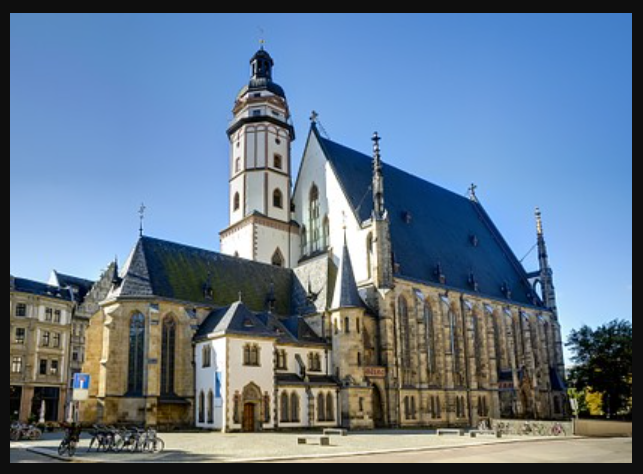
     In Leipzig, Saxony, back in the 1730s and 40s, every Sunday morning was a Gospel extravaganza at St. Thomas Lutheran Church.  Johann Sebastian Bach was the Kantor, the church’s music director, and the Sunday morning service centered around a fourfold proclamation of the Gospel for that day.  First the Gospel would be read, or perhaps chanted, by the pastor.  Then the congregation would sing the Hymn of the Day, which paraphrased and expounded on the same Gospel text.  Then the pastor would preach, again primarily on the Gospel.  Finally, Bach would lead the Cantata, a mini-Christian opera that riffed on the base melody of the Hymn of the Day.  The Cantata retold the Gospel, in music and song, for a fourth time.  It was quite the deal.  Bach prepared a new cantata every week, for decades.  His choir and orchestra could have as many as a dozen singers and twenty instrumentalists.  

   The goal of this fourfold Gospel proclamation was that all the saints gathered that Sunday, including the especially hard-headed Germans among them, would carry the Gospel with them throughout the week.  This fourfold Gospel proclamation sought to make God’s Word about Christ and His Salvation seep into their bones, to be hummed and whistled and pondered as these Saxons made their way through their daily tasks.  Now, I don’t doubt that Bach and his musicians and the pastor and everyone at St. Thomas Church may have also felt a lot of pride in the amazing musical talent that was displayed.  But in the end, it was all Soli Deo Gloria, all for God’s glory, and for the good of His people.  

   And this morning in Hill City and Custer, we’re doing just the same thing! O.k., we’re doing 75% of it at Our Savior's, Hill City. We have heard the Gospel for this All Saints Day.  Our Hymn of the Day, while not dating from the 16th century, beautifully repeats Jesus’ words from Matthew 5.  I will primarily preach on the Gospel.  And over in Custer, the Our Redeemer choir will follow up, not with a full blown cantata, but with a beautiful piece that again proclaims the truth about being blessed, from Jesus’ Sermon on the Mount.  A fourfold proclamation of the Good News of true blessing, in reading, hymn, sermon and chorus. 

    There are of course a few differences between Leipzig and Hill City/Custer.  We have an iTunes organ in Hill City, and in Custer, an organ and a choir, but no orchestra.  Our musical offerings of praise probably do not quite reach the level of mastery that Bach drew out of his musicians and singers.  But on this All Saints Day, as we celebrate the joy of the victory of the Christians who have gone before and who rejoice in the presence of God, we share the same purpose.

   Even more importantly, we have the same Savior as those saints in Leipzig, three centuries ago.  Which is great, and very appropriate, on this day when we focus on the joyous heavenly celebration that awaits all who trust in Jesus.  

   Today we celebrate with all the saints, all the holy ones of God who now rest from their labors.  The death of beloved family and friends is painful.  But for all those who have been claimed and sustained in Baptismal faith, we have the sure promise that their souls bask in God’s glory, right now, awaiting joyfully the final trumpet, and the great in-the-flesh family reunion of all the resurrected saints of God.  Untold numbers of believers from every tribe and race, even from the hard-headed Germans, including Grandma and Uncle Bill and Aunt Barb, will fall down together in eternal joy before the Lamb. 

   Wonderful stuff.  There’s just one problem: the fourfold Gospel that we are proclaiming today.  I’m not saying there’s anything wrong with the word of Jesus.  But it is a problem, for us.  Jesus’ words really challenge us, you the hearer, and me, the poor miserable sinner called to preach this text.  It is tempting to ignore the issue, talk a little bit more about the glory of heaven, and call it a sermon.  But, at this point, after going on and on about a fourfold Gospel proclamation,  I’m pretty much committed to actually preaching about today’s Gospel.  So, here we go. 

   Jesus begins the Sermon on the Mount with the Beatitudes, these nine “Blessed” statements.  They do not describe situations that we naturally consider blessings. 

    3 "Blessed are the poor in spirit, for theirs is the kingdom of heaven.  4 "Blessed are those who mourn, for they shall be comforted.  5 "Blessed are the meek, for they shall inherit the earth.  6 "Blessed are those who hunger and thirst for righteousness, for they shall be satisfied.  7 "Blessed are the merciful, for they shall receive mercy.  8 "Blessed are the pure in heart, for they shall see God.  9 "Blessed are the peacemakers, for they shall be called sons of God.  10 "Blessed are those who are persecuted for righteousness' sake, for theirs is the kingdom of heaven. 

  11 "Blessed are you when others revile you and persecute you and utter all kinds of evil against you falsely on my account.   12 Rejoice and be glad, for your reward is great in heaven, For so they persecuted the prophets who were before you. 


   We want the promises – the kingdom of heaven, the comfort.   We are happy to be satisfied with the righteous inheritance of the earth, and to see God our Redeemer face to face, with our own eyes.  How my heart faints within me. But to be poor in spirit?  To mourn.  To be meek, turning the other cheek?  

   Of course we want to be merciful.  You do want to be merciful, right?  You never want to punish your enemies, do you?  You never want to tell your boss, or that cop who just pulled you over, or your teacher exactly what you really think, do you?  Or your mother?  Or your husband?  Or your wife? 

   Everybody wants to be pure in heart, except when we don’t.  Except when in our hearts we find ourselves pursuing evil, desiring what we know God has forbidden, and neglecting what He calls us to think and say and do.   

   Certainly Jesus, the Christ of God, is describing how the Christian life should look.  One reaction we might have to hearing the Beatitudes, like many have had throughout the centuries, is to try harder.  Be humble.  Demonstrate your mournful spirit.  Be meek, full of mercy and righteousness.  Just do it, whatever it takes, to earn the blessing.  But as Luther learned bitterly in his cell in the monastery, the sin that surrounds and clings to us will not be conquered, will not be washed away, by our efforts.  The good that I wish to do, this I do not do.  The evil that I seek to shun, this I do.  Oh wretched man that I am, who will save me from this body of death?  

   Thanks be to God, through Christ Jesus our Lord.  

   Pursuing the virtues that Jesus extols, poverty of spirit, meekness, righteousness, purity, even bearing up under persecution, all of these are worthy of our highest effort.  Life together in this world will be better, insofar as we honestly pursue God’s will.  But will we reach the goal?  Will we become pure enough, meek enough, humble enough, to merit the kingdom of heaven and all the blessings that Jesus promises?  

   No.  Sadly, our pursuit of righteousness will most of all demonstrate how far we fall short.  Which, painfully, is God’s loving intent.  It is not pleasant, but it is necessary for you and me to realize just how much we lack God’s righteousness.  Indeed, the surest way to become poor in spirit is to honestly pursue righteousness and holiness, or saintliness.  Truly and honestly seeking perfection will make you truly humble.    

    The Beatitudes, Jesus’ description of the saintly life, will paradoxically make it very clear to us how dirty our robes are, how sin oozes from our being and stains even our best efforts.  The Beatitudes understood as Law, as a to do list for us, (and they are a to do list for us), these Beatitudes will make it clear that we cannot complete the task.  We will not reach the Kingdom of Heaven this way.  We are stuck, sinking in the mud of our own uncleanness, in need of rescue, in need of a Rescuer.  

   Jesus is our Rescuer.  But in our Gospel today He does not immediately reveal the Good News that He is our Rescuer.  If we read on in the Sermon on the Mount, we hear Him continue to describe the life of His disciples in terms we might admire, but which we never fulfill. Jesus warns you not to even mutter in anger about your brother.  Do not even think a sexual thought about someone who is not your spouse.  If someone strikes you in the face, do not take revenge, rather turn to him the other cheek.  Love your enemies, and do good to them. Woe is me, the task is too much, too much for any of us.  

      Jesus is our Rescuer.  But we need to read all the way to the end of the story to see it.  But once we know the end, we can then see how these Beatitudes, a law of good works we cannot fulfill, are also a description of the path of Jesus, as He comes to our rescue.  

   For our Lord Jesus, facing both the worst evil mankind could dish out, and the very wrath of God against sin, became truly poor in spirit, in the Garden of Gethsemane.  Sweating blood, He mourned the evil that surrounded Him, and the suffering He was about to endure.  Meekly the Creator submitted to the rebellion and murderous plan of His own creatures, not raising His Divine hand to protect Himself, but rather turning His other cheek to be struck again.  He didn’t even speak in His own defense.  He hungered and thirsted for our righteousness as He hung on the Cross, pouring out the blood from His pure and merciful heart, even forgiving His enemies as the nails were driven into His flesh.  The Son of God made peace with His Father, not for Himself, but for you and me, so that we can be called sons of God, by faith in Jesus, daughters of the Heavenly King, washed clean in Christ’s blood. 

   Jesus endured all this reviling and persecution, for the joy set before Him.  The joy of rescuing us from the power of Satan, and making us His Father’s Holy People, the Church of all the saints who trust in Jesus.  For in Him, through Him, and by Him, you have the comfort of citizenship in God’s heavenly kingdom.  Your need for righteousness has been satisfied, by the mercy and peace of Jesus, the blessed one.  He will present you before His Father, holy, righteous, and blessed.  Blessed to be seen by God, and to see Him.  Blessed to see God face to face, with your own eyes. 

   And so, despite your sin, and the trouble of this world, you are truly blessed now,
in Jesus.  For He washes your robes and makes them white in His own blood.  Today, like the saints of God who have gone before, you face many trials, from within, and from without.  Face them without fear, even though it is very hard to see how you can.  For while it is not always visible today in this world, you have been called children by God, and so this is what you are, by the faith and unity you have with Jesus, your blessed Savior. 

   And so we can and do sing with all the saints, from Leipzig, from Hill City, from Custer, and from every time and place on earth where the blessings of Jesus have been proclaimed to sinners, for their forgiveness and salvation.   With all the heavenly host, we sing the glory of the Lamb, today, and forever and ever, Amen.    


Monday, October 31, 2022

True Freedom - A Sermon for Reformation Day, A+D 2022

Reformation Day, (Observed) 
October 30th, anno + Domini 2022
Our Redeemer and Our Savior’s Lutheran Churches
Custer and Hill City, South Dakota
True Freedom - John 8:31-36

So if the Son sets you free, you will be free indeed.                    

   Freedom.  The Jews who had believed in Jesus have a freedom problem.  They think
they are free.
  They think they have always been free, and so they resent anyone, even this miracle worker Jesus, who dares suggest they are not free. 

   Freedom.  How free are we?  We are citizens of the United States of America, where freedom has been a central topic since the founding.  And it still is.  Many today worry that we are in danger of losing fundamental freedoms.   Others warn that the excessive exercise of freedom is leading us down a path to chaos, chaos that could even lead us into fascist dictatorship. 

   The Supreme Court recently returned the question of abortion to the various states, to be determined by them.  The justices could not find where the Constitution sets them free to determine for the whole nation this fraught question.  Abortion rights advocates scream to high heaven that every woman’s fundamental freedom to govern her own body has been stolen.  God the Author of Life is not listening to their cries, and Christians and others celebrate the opportunity to restore to unborn baby girls and boys the freedom to be born.  But the battle is only beginning.  The goal of changing hearts and minds so that abortion is unthinkable is a very long way off.  One thing is certain:  this fundamental struggle over values, life and the definition of freedom does not make anyone feel free.

   Here in West River South Dakota, we cherish the freedom of self-sufficiency.  Which can seem like a winning project, unless your self-sufficiency is tied to the stock market, and your retirement nest egg is suddenly much smaller than it was last year.  But no worries, you gather, cut and split your own firewood, so at least you’re free to be warm.  Unless a back injury ends your ability to wield a chain saw.             

   Freedom is tricky.  We might even ask the question: “How free do we truly want to be?   No one wants to be literally locked up and held in bondage.  But to be truly free in all aspects, to be a self-made man or woman, responsible to make all your own decisions, judge situations and people based on your knowledge and wisdom, and be totally responsible for your own outcomes?  This is actually quite frightening.

   We used to outsource a lot of this self-governance work to institutions and affinity groups, tribes if you will.  It used to be that we said things like:  I do this job for a living because everyone in my family does this for a living.  I approach life this way because my church tells me to do so.  I think this way about politics or act this way in society because I work in this industry or sector, have this ethnic background, or am a member of this or that organization.  And that’s how my kind of people think and act.  Sure, those old institutions made a few demands on me, pretty minor, usually.  But I got a lot in return, including freedom from having to make all those difficult judgments and choices on my own.

   But these old institutions, such as the family, churches, unions, political parties, civic organizations and a hundred other traditional institutions have fallen on hard times.  Today we are free to reject their guidance and influence.  But we’re still tribal creatures, to be sure.  And the new tribes that have risen up to replace the old tribes demand more.  No matter whether you ascribe to “woke-ism,” “environmentalism,” “feminism,” “conservatism,” “liberalism,” or “Trump-ism,” these new tribes demand to influence every part of your life, and offer less freedom to think and act your own way.  One-hundred percent tribe loyalty is the new expectation.  Any deviation from the tribal stance is verboten.  If the tribal stance on a person or an issue flips 180 degrees tomorrow, well, you better make an about face, without asking why.  Because you can quickly become the ‘enemy’ and lose your status as a good tribe member.  Nevertheless, many people sign up for a side, preferring to be a less-than-free insider, rather than a free outcast.    

    Many sign-up for these new tribes.  And many others withdraw.  The same electronic gadgets that make these new tribes seem real and powerful also provide a means of escape.  To disconnect and lose oneself in another reality feels very freeing in the moment.  But does this freedom last?  Is this freedom real?  As many do with a variety of chemical substances, legal and illegal, so also gaming, binge-watching, internet pornography and the hopefully never-to-be-fully-realized “meta-verse” offer illusions of freedom, the sensation of being commander of one’s own destiny, as long as you stay plugged in. 

   But if an internet porn addiction makes me incapable of healthy physical intimacy with my wife, who’s the slave now?  If I can’t finish school or get a good job because I spend 10 hours every day trying to level up in my favorite game, who is the master of whom?  And can I really boast of my personal autonomy and liberty when I look up from a mindless trail of YouTube videos and realize it’s 3:00 a.m., I have to be at work in a few hours, but I’m too wired too fall asleep? 

If the Son sets you free, you will be free indeed. 

   All of our fruitless efforts of finding freedom, or avoiding freedom while pretending to be free, all of these share some fundamental problems.  All of these feature a human definition of freedom at their center.  I may make my own definition of freedom, or I may choose to accept the definition of some cultural leader.  Many of them sound quite beautiful.  Life, liberty and property.  From each according to his ability, to each according to his needs.  The pursuit of happiness.  Or, the greatest good for the greatest number.  The unseen hand guiding the market economy.  Freedom in collective equality.  Power to the people.  Long live the Queen!  Some of these ideas may have better historical track records than others, but none of them can truly make you free.    

   Human ideas about freedom see enemies out there, in bad-faith actors that threaten us from all sides.  And they see the key to freedom inside us, in the heart of each individual, if we can just choose the right method, or the right leader, and commit ourselves fully to the cause. 

   Jesus’ truth about freedom and slavery flips this perspective upside down:  “Truly, truly, I say to you, everyone who commits sin is a slave to sin.”  Your lack of freedom is not imposed by some evil master – you are the problem.  You are the problem, unless of course, you don’t sin? 

   But, lest we then simplistically suppose that the solution to slavery is self-reformation, that is, just stop sinning, please notice: this is not how Jesus completes His thought.  “Truly, truly, I say to you, everyone who commits sin is a slave to sin. The slave does not remain in the house forever; the son remains forever. So if the Son sets you free, you will be free indeed.”  Your lack of freedom is a sin problem.  But the solution is not you overcoming sin.  You can’t; you are its slave.  No, the only solution is the Son, coming to set you free.  

   The Jews who had believed in Jesus do not like being called “slaves.”  Even though the history of Israel is filled with periods of the literal enslavement of God’s people, to Egyptians, Assyrians, Babylonians and more, and even though at the moment of this conversation with Jesus, the Jews lived without freedom under the harsh rule of the Roman Empire, still they protest:  “We have never been slaves of anyone!” 

   To these self-deluded Jews, Jesus gives His unexpected and unpopular definition of slavery, and of freedom:  “Truly, truly, I say to you, everyone who commits sin is a slave to sin. The slave does not remain in the house forever; the son remains forever. So if the Son sets you free, you will be free indeed.”

   Much like some of you may have been offended when I mentioned your favorite self-chosen pursuit of freedom, these Jews who had believed in Jesus were upset by His words.  Most of them would soon abandon Jesus, as He spoke in every greater detail about His project to set sin-slaves free.  The pure Gospel is strange and offensive precisely because Christ declares that true freedom is only found in complete dependence on Him. 

   The Jews in our Gospel and many people today don’t want Jesus’ kind of freedom.  In fact, He offends them.  So be it, Jesus is not concerned with avoiding offense.  He is concerned with winning our freedom. 


The radical truth of Jesus’ freedom winning project is the great truth that the Holy Spirit revealed to Martin Luther, and led to the Reformation.  Jesus didn’t do part of what was necessary to set us free, leaving part of the work of salvation to us.  No, Jesus did all of it, 100%, for you.  God’s Son became a man in order to take our place as a slave, so He could break the chains that bind us, once and for all.  Jesus took your sin, your slavery to sin, upon Himself, and carried it to the Cross.  Jesus won freedom for you and me and for every sinner, freedom won through submission, submission to evil, submission to suffering, finally, even submission to death. 

   Too often we foolish humans are tempted to think we can find freedom in death, that is, in our own deaths.  In this we are sadly and dangerously mistaken.  But in the death of Jesus, we do find freedom,  Because the death of Jesus solved our problem with sin, by forgiving us.  Only Jesus’ death is a good death, because only His death leads to new life.  New life, revealed by Jesus in His Resurrection, and shared with all who die and rise with Him through Baptismal faith.    

   Martin Luther and the other Reformers regularly risked imprisonment and death, because they dared to freely proclaim their rejections of the lies of the false tribe that the Roman Church had become.  The Church had fallen into decay, she no longer was about setting sinners free in Christ.  Rather her pastors and bishops sought to control sinners with false laws, for earthly gain.  The true freedom of the Gospel was denied.  The institution of the Church of Rome had become a slave master. 

   Luther and many others dared to rebel against their tyranny.  And because Christ and His free forgiveness were in the center of their message, because the Holy Spirit went before and behind their efforts, the truth of the pure Gospel rang out again, changing the course of history, and setting millions of sinners free. 

   Will the voice of true freedom continue to sound forth in our day?  I pray that it will.  To help us along that path, there are a few key points we should all remember and live by.   

   The Church is not called to earthly greatness, nor to wealth or prestige or power.  We are called to proclaim freedom, through the blood-bought forgiveness of sins that the Son of God has won for all people.  To proclaim freedom, we must, as Jesus did, speak the truth about human sin.  And then, when the truth of the Law has done it’s work, we are to proclaim freedom.  Freedom from guilt. Freedom from fear.  Freedom from the slavery of seeking identity and meaning in some other tribe. 

   You may belong to many, or just a few earthly groups, and that’s fine, as long as these groups don’t pull your from your real tribe.  For all who trust in the Christ who claimed them in baptism are members of the only in-group that matters – the mysterious Body of Christ, His Bride, the Church, the whole tribe of believers from every time and place, who rest in the freedom that Jesus has won for us.      

   The Son has set you free.  By His atoning blood, you are free from guilt, free from sin, free from fear of God’s wrath.  You are even free from the fear of the scorn and persecution of mankind.  And so you are also free to speak, to sing the praises of the One who died to set you free.  Free to love, as you have been loved. 

   Rejoice, for you are truly free in Jesus Christ, your crucified, risen and truly present Lord and Savior.  Amen